
Post top LED lights are widely used in parks, pedestrian pathways, residential communities, campuses, plazas and landscape lighting projects.
Unlike conventional roadway fixtures, post top luminaires are installed directly on top of a pole and often combine functional illumination with architectural appearance.
However, selecting the right post top LED light involves more than choosing an attractive fixture.
Project buyers should consider wattage, lumen output, light distribution, mounting height, color temperature, IP rating, housing materials, pole compatibility and long-term maintenance.
This guide explains the main factors to consider when selecting post top LED lights for outdoor commercial projects.
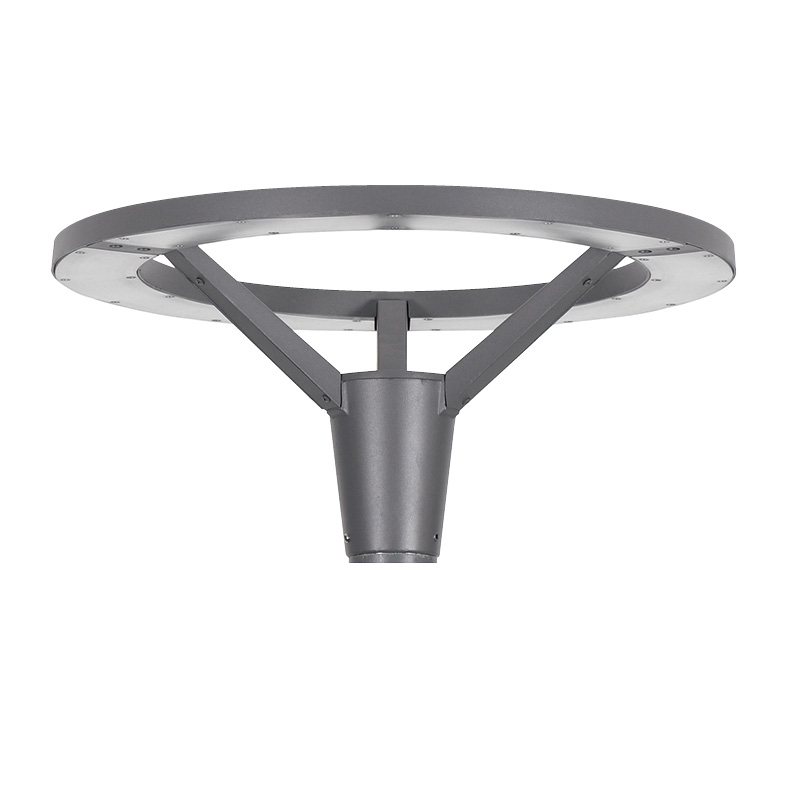
What Is a Post Top LED Light?
A post top LED light is an outdoor luminaire designed to be mounted directly on top of a lighting pole.
These fixtures are commonly used in environments where both lighting performance and visual appearance are important.
Typical applications include:
Public parks
Pedestrian pathways
Residential communities
Commercial landscapes
University campuses
Plazas
Gardens
Recreational areas
Hotel and resort landscapes
Urban pedestrian areas
Compared with conventional street lights, post top LED lights generally have a more decorative or architectural appearance.
They are therefore especially common in pedestrian-oriented outdoor environments.
For a broader overview of park lighting applications, see our:
LED Park Lights: A Complete Buyer’s Guide
1. Start With the Application
The first step in choosing a post top LED light is identifying the application.
Different environments require different lighting performance.
For example:
| Application | Main Consideration |
|---|---|
| Park pathways | Uniformity and pedestrian visibility |
| Landscape areas | Visual comfort and fixture appearance |
| Plazas | Wider light distribution |
| Residential communities | Comfortable brightness and aesthetics |
| Campuses | Safety and maintenance |
| Commercial landscapes | Appearance and reliability |
A fixture suitable for a narrow pathway may not provide enough coverage for a large plaza.
Therefore, the application should be defined before selecting wattage or pole height.
2. Choose the Right Wattage and Light Output
One of the first specifications buyers normally compare is wattage.
However, wattage only describes power consumption.
It does not directly indicate how much usable light reaches the ground.
For this reason, buyers should evaluate:
Rated power
Lumen output
Luminaire efficacy
Optical distribution
Mounting height
For example, the JHTY-9028 Outdoor LED Park Light is available in:
30W / 60W
This gives project designers flexibility when selecting fixtures for different outdoor environments.
A lower-output configuration may be suitable for smaller pedestrian areas, while higher-output versions can be considered for broader landscape spaces, depending on photometric requirements.
The final selection should ideally be confirmed using lighting calculations or photometric simulation.
3. Pay Attention to Light Distribution
For professional outdoor lighting projects, optical performance is one of the most important factors.
A post top fixture should not simply produce light in every direction.
Instead, the optical system should distribute light efficiently toward the intended ground area.
Poor optical design may lead to:
Excessive glare
Dark areas between poles
Uneven illumination
Unnecessary upward light
Light spill outside the target area
More fixtures being required
The JHTY-9028 uses a secondary light distribution design, helping direct light toward the intended outdoor area.
For project applications, buyers should request photometric information such as:
IES files
Light distribution curves
DIALux simulation data
These files can help determine appropriate pole spacing and expected ground illumination before installation.
4. Select the Appropriate Color Temperature
Color temperature influences how an outdoor environment looks and feels at night.
For post top lighting, common choices may range from warm white to cool white.
The JHTY-9028 supports a CCT range of 2700K–6500K, providing flexibility for different project environments.
Typical selections include:
2700K–3000K
Warm white light.
Often suitable for:
Parks
Gardens
Residential communities
Landscape areas
Hospitality environments
Warm light can create a softer and more comfortable nighttime atmosphere.
4000K
Neutral white.
Often used for:
Campuses
Commercial landscapes
Public spaces
Pedestrian areas
It provides a balance between visual clarity and comfort.
5000K–6500K
Cool white.
May be selected where higher perceived brightness or cooler visual appearance is required.
However, the final CCT should always depend on project requirements, surrounding environment and local lighting regulations.
5. Check the CRI
CRI, or Color Rendering Index, describes how naturally colors appear under a light source.
For many general outdoor applications, a CRI above 70 can be sufficient.
The JHTY-9028 is specified with:
CRI >70
This makes it suitable for general outdoor park and landscape lighting applications where functional visibility is the main requirement.
For architectural, retail or hospitality environments where accurate color appearance is more important, buyers may wish to specify higher CRI options if available.
6. Check the IP Rating
Outdoor luminaires must operate reliably in environments exposed to rain, dust, humidity and temperature changes.
One of the most important specifications is therefore the Ingress Protection rating.
The JHTY-9028 has an:
IP65 protection rating
IP65 means the fixture is designed to resist dust ingress and water jets, making it suitable for many outdoor environments.
However, buyers should not evaluate IP rating alone.
Also consider:
Housing sealing
Cable entry design
Driver compartment protection
Surface coating
Gasket quality
Corrosion resistance
For coastal, industrial or highly corrosive environments, additional corrosion protection may also be necessary.
7. Consider Housing Material and Heat Dissipation
Outdoor LED luminaires generate heat during operation.
Effective thermal management is important because excessive heat can negatively affect LED and driver lifetime.
The JHTY-9028 uses:
High-pressure die-cast aluminum housing
with a:
PC lampshade
Die-cast aluminum is commonly used in outdoor LED fixtures because it offers:
Good structural strength
Efficient heat conduction
Outdoor durability
Manufacturing consistency
Resistance to deformation
The PC cover also helps protect the optical and LED components from outdoor exposure.
When comparing post top fixtures, buyers should therefore look beyond appearance and evaluate the overall housing and thermal design.
8. Make Sure the Fixture Matches the Pole
Pole compatibility is a practical issue that is often overlooked during procurement.
A post top luminaire must fit the pole spigot correctly.
The JHTY-9028 uses an:
Installation spigot diameter: 60 mm
Before ordering, buyers should confirm:
Pole top diameter
Mounting method
Required adapter
Pole height
Fixing bolts
Cable routing
Installation dimensions
A mismatch between fixture and pole can create unnecessary installation delays and additional fabrication costs.
For this reason, the pole specification and luminaire specification should always be confirmed together before mass production.
9. Check the Input Voltage
Outdoor projects may be installed in different countries or regions.
The lighting fixture must therefore be compatible with the local electrical system.
The JHTY-9028 supports:
AC 85–265V
This wide input voltage range can make the fixture suitable for use across multiple markets.
Its specified power factor is:
PF >0.9
A higher power factor is generally desirable for commercial lighting systems because it allows electrical power to be used more efficiently.
For project procurement, buyers should also confirm:
Frequency
Surge protection
Driver brand
Dimming compatibility
Electrical class
Local certification requirements
depending on the target market.
10. Consider Operating Temperature
Outdoor lighting fixtures may need to operate in both very cold winters and hot summers.
The JHTY-9028 is specified for an operating temperature range of:
-40°C to +60°C
This wide temperature range can make the luminaire suitable for many outdoor climates.
However, actual project conditions should still be evaluated, particularly for:
Desert environments
Extremely cold climates
Coastal environments
High-humidity regions
Industrial areas
The driver, LEDs, sealing materials and housing all need to perform reliably under the expected environmental conditions.
11. Evaluate Expected Lifetime and Maintenance
Post top luminaires are often installed several meters above the ground.
Maintenance can therefore require lifting equipment, labor and temporary site closures.
Long-term maintenance cost should be considered during product selection.
The JHTY-9028 has a specified LED lifetime of:
more than 50,000 hours
This can reduce the need for frequent lamp replacement compared with many conventional lighting technologies.
However, buyers should also ask about:
Driver lifetime
Warranty
Spare parts
Replaceable components
Driver accessibility
LED module accessibility
Maintenance procedure
For large projects, these factors can significantly affect the total cost of ownership.
JHTY-9028 Technical Specifications
The following specifications provide an example of the technical information buyers should review when selecting a post top LED light.
| Specification | JHTY-9028 |
|---|---|
| Model | JHTY-9028 |
| Rated Power | 30W / 60W |
| Input Voltage | AC 85–265V |
| Power Factor | PF >0.9 |
| Color Temperature | 2700K–6500K |
| CRI | >70 |
| Protection Grade | IP65 |
| Working Temperature | -40°C to +60°C |
| LED Lifetime | >50,000 hours |
| Housing Material | High-pressure die-cast aluminum |
| Lampshade Material | PC |
| Installation Spigot | Ø60 mm |
| Product Size | 580 × 320 mm |
| Net Weight | 4.2 kg |
| Gross Weight | 4.7 kg |
| Packing Size | 590 × 590 × 330 mm |
12. Think About Installation and Logistics
Product size and weight are also important for contractors and distributors.
The JHTY-9028 has an approximate product size of:
580 × 320 mm
with a net weight of approximately:
4.2 kg
and gross weight of:
4.7 kg
Its packing dimensions are:
590 × 590 × 330 mm
This information may appear less important than wattage or IP rating, but it matters for:
Pole structural design
Installation labor
Carton dimensions
Warehouse planning
Container loading
Shipping cost
For importers and distributors purchasing in volume, packaging efficiency can influence the overall landed cost.
13. Request Photometric Data Before Large Orders
Technical specifications are important, but they do not tell the complete lighting story.
Two 60W post top lights can perform very differently depending on their optical systems.
Before specifying a fixture for a large project, buyers should consider requesting:
IES files
Photometric reports
DIALux simulations
Distribution curves
Sample units
This helps verify important factors such as:
Illuminance
Uniformity
Pole spacing
Glare
Light coverage
For projects involving multiple poles, photometric performance can be more important than nominal wattage alone.
If you are planning a complete park lighting layout, our park lighting design guide explains how pole height, spacing, optics and lumen output should be evaluated together.
14. Post Top Light vs Street Light: Which Should You Choose?
Post top lights and street lights serve different purposes.
Post Top LED Lights
Usually selected for:
Parks
Pathways
Landscapes
Residential communities
Plazas
Pedestrian areas
They place greater emphasis on architectural appearance and pedestrian-scale lighting.
LED Street Lights
Usually selected for:
Public roads
Main traffic routes
Industrial roads
Large parking areas
They are normally designed around roadway-specific optical distribution and higher mounting heights.
Therefore, buyers should choose the fixture based on the actual application rather than treating all outdoor LED luminaires as interchangeable.
Recommended Post Top LED Light for Park Projects
For parks, pedestrian pathways, residential communities and landscape environments, the JHTY-9028 Outdoor LED Park Light provides a modern post-top design with several specifications suitable for outdoor projects.
Key characteristics include:
30W / 60W power options
2700K–6500K CCT
IP65 protection
Die-cast aluminum housing
PC cover
AC 85–265V input
PF >0.9
50,000-hour LED lifetime
-40°C to +60°C operating range
Ø60 mm pole mounting
Questions to Ask a Post Top LED Light Manufacturer
Before placing an order, buyers should ask the manufacturer:
What wattage and lumen packages are available?
Can you provide IES photometric files?
What optical distributions are available?
What pole diameter does the fixture support?
What CCT options are available?
What driver is used?
What is the surge protection level?
What certifications are available?
Can the driver or LED module be replaced?
What warranty is provided?
Can you provide lighting simulation support?
What is the production lead time?
For larger commercial projects, buyers should also consider requesting samples before finalizing the order.
Frequently Asked Questions
What is a post top LED light?
A post top LED light is an outdoor luminaire installed directly on top of a lighting pole. It is commonly used in parks, pathways, plazas, residential communities and landscape environments.
What wattage should I choose for a post top LED light?
The correct wattage depends on mounting height, pole spacing, required illuminance, optical distribution and project layout. Wattage should therefore be considered together with lumen output and photometric performance.
What IP rating is suitable for outdoor post top lights?
IP65 is commonly used for outdoor luminaires because it provides protection against dust and water jets. More demanding environments may require additional protection depending on project conditions.
What color temperature is best for parks?
Warm white options such as 2700K–3000K are often used in landscape and pedestrian environments, while 4000K can provide a more neutral appearance. The final selection should depend on the project's visual and environmental requirements.
What pole diameter does the JHTY-9028 require?
The JHTY-9028 is designed for a 60 mm installation spigot. Pole dimensions should always be confirmed before ordering.
Is 30W or 60W better for park lighting?
Neither is universally better. The appropriate power depends on project layout, mounting height, pole spacing and required lighting levels. Photometric simulation should be used for larger projects.
Choosing the Right Post Top LED Light
Choosing a post top LED light should involve more than comparing appearance and price.
Professional buyers should evaluate:
application + wattage + lumens + optics + CCT + IP rating + housing + pole compatibility + lifetime + maintenance
together.
For park and landscape projects, this approach can help achieve better lighting performance while reducing installation and maintenance problems.
If you are planning an outdoor park, pathway or landscape lighting project, Jinhui Lighting can provide product specifications, photometric files and technical support for suitable outdoor lighting solutions.
Post time: 2026-09-11